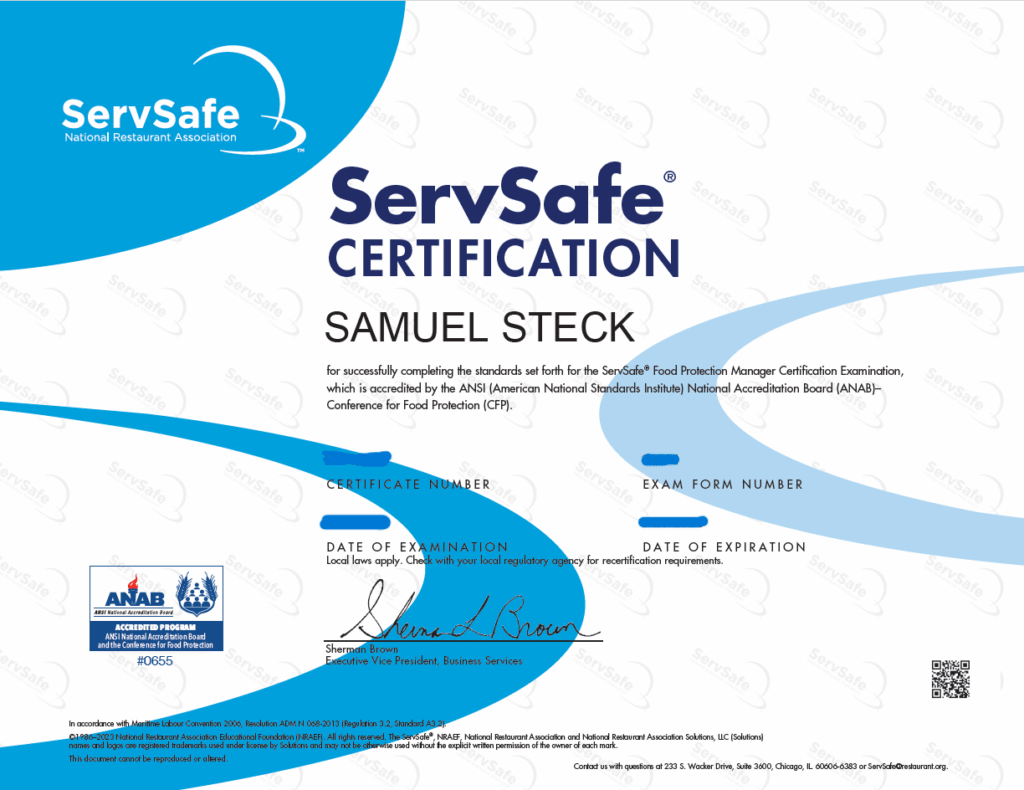
I Can’t Find My ServSafe Certificate – What To Do When You’ve Lost Your Food Manager or Food Handler Certification

Losing your ServSafe certificate (or any Food Manager or Food Handler certificate) can be stressful, especially when an employer, inspector, or licensing office needs a copy right away.
The good news: you can usually recover it.

The tricky part: there is no universal ServSafe certificate lookup and no single statewide database for Food Manager or Food Handler records. Because each approved program maintains its own database, your ability to retrieve a certificate depends entirely on which exam or training provider you used.

This guide will walk you through how to find your certificate, how ServSafe handles replacement certificates, and what to do if you’re not sure which provider you trained with.

There Is No Statewide or National ServSafe Certificate Lookup

(And No Universal Food Manager Lookup, Either)

Many people assume there’s one place to search for any Food Manager certification, but that’s not how the system works.

In states like Florida, there are 12+ state-approved Food Manager programs – each with their own login portals, databases, and customer service departments.

Some of the most common Food Manager exam providers include:

  • ServSafe
  • NRFSP (National Registry of Food Safety Professionals)
  • Always Food Safe
  • Others depending on the state

Because every program issues its own certificate, you must know which company administered your exam to retrieve your document.

If you’re not sure which exam you took, look back at:

  • Old emails
  • Exam confirmation messages
  • Receipts
  • Training provider info
  • Your online account (if you created one)

Once you know the exam provider, you can contact them directly or log in to your account to download your certificate.

How To Find Your ServSafe Food Manager Certificate

If you remember taking ServSafe, use the steps below:

1. Log into your ServSafe account

  • Visit: ServSafe.com → Login → “Certificates” tab
  • Many people never realized their certificate was stored online the entire time.

2. Use ServSafe’s Certificate Lookup Tool

ServSafe offers a basic search option if you remember your exam details.

You’ll need information like:

  • Name
  • Exam date
  • Exam session number (if available)

Keep in mind: If your name is misspelled, you may have trouble locating it.

3. Contact ServSafe customer service

If you still can’t find it, contact ServSafe directly. They can look up your exam using personal details, but response times may vary. You can reach them at 800-765-2122.

What If I Didn’t Take ServSafe?

(NRFSP, Always Food Safe, etc.)

If you took any Food Manager exam besides ServSafe, you’ll need to visit that provider’s website or contact them directly.

Because there are more than a dozen approved companies, there is no central place to retrieve certifications.

Search your email for keywords like:

  • Food Manager exam
  • Food safety certification
  • Food manager cert
  • Exam confirmation

Once you find the provider’s name, visit their site and look for:

  • Certificate lookup page
  • Login portal
  • Lost certificate or Print certificate instructions

Lost Your Food Handler Certificate?

It’s Even Harder – There Are Over 100+ Approved Programs in Florida

Food Handler certificates are even trickier than Food Manager certifications.

In Florida alone, there are 100+ approved Food Handler training providers, including online and in-person options. Every company maintains its own records, meaning:

  • There is no statewide database (there is a database, but it’s not comprehensive and doesn’t give you access to your certificate)
  • There is no universal Food Handler lookup
  • If you don’t know the provider name, you may be out of luck

Some of the most common Food Handler providers include:

  • Food Safety First (the program Serve It Up Safe uses)
  • SafeStaff
  • 360Training
  • StateFoodSafety
  • Learn2Serve
  • ServSafe Food Handler (not approved in Florida)
  • In-house employer training programs

If your Food Handler course was online

You have the best chance – simply log into the provider’s portal and download your certificate.

If it was a paper test or in-person class

You must contact the instructor or company. If they’ve closed or cannot locate your record, you may need to retake the course.

Need a New Food Handler Certificate?

Serve It Up Safe Offers an Affordable, Hassle-Free Option

If you lost your Food Handler card or simply need a new one for employment, Serve It Up Safe offers:

Food Handler Certificates – just $7 each

This includes the Food Handler guidebook, making it significantly more affordable than SafeStaff’s $10+ book and certificate combination.

Online Food Handler Training (Launching January 2026!)

Our online program will be:

  • More affordable than SafeStaff’s $15 online training
  • Easier to understand
  • More engaging
  • Quicker to complete
  • Designed specifically for FOH/BOH staff members

If you need Food Handler certificates today:

We can issue certificates quickly for individuals or entire teams.

Need a Food Manager Certificate Instead?

Serve It Up Safe also offers accredited Food Manager training and exam options for individuals and groups. If you need a Food Manager certification or want to schedule a private class, check out our Food Manager page or reach out directly.

Final Tips for Finding Your Certificate

Here’s a quick checklist:

  • Try to remember which company issued your Food Manager or Food Handler certification
  • Search your email for keywords or receipts
  • Log into your training provider’s online portal
  • Use the provider’s certificate lookup tool (if available)
  • Contact the provider directly for verification
  • If you still can’t find it – you may need to retrain

Whether you need Food Manager training or Food Handler certification, Serve It Up Safe can help you get the documentation you need fast.

Contact us here or reach out to at info@serveitupsafe.com with any questions!

Underage Drinking Raids Are Increasing – Why Florida Bars and Restaurants Need State-Approved Alcohol Training

Law enforcement agencies across the country are stepping up efforts to reduce underage drinking, and the recent massive bar raid in Arizona that led to 249 arrests proves it. According to reports, officers targeted multiple nightlife districts and found dozens of minors inside bars using fake or altered IDs.

For bar owners, restaurant operators, and nightlife managers, this trend highlights a growing reality: underage drinking enforcement is intensifying, and businesses that fail to train their staff properly are at serious risk.

Underage Drinking Raids Are Becoming More Common Nationwide

Police departments and state regulators are increasing compliance checks, fake ID crackdowns, and coordinated bar raids. These enforcement sweeps aren’t limited to major holidays anymore – they’re happening year-round.

Right here in Florida, similar operations were conducted in August, targeting popular nightlife districts such as Ybor City and SoHo in Tampa. Agencies issued citations, made arrests, and stressed that more underage drinking stings are on the way.

Local, state, and federal agencies have all signaled the same message: Businesses must take active steps to prevent alcohol sales to minors.

The Consequences for Serving Minors Are Severe

Serving alcohol to an underage guest is not a small mistake – it’s a criminal offense and can lead to:

  • Fines and penalties from DBPR and local law enforcement
  • Administrative action against your alcohol license
  • Possible suspension or revocation of your liquor license
  • Civil liability in the event of injury or damages
  • Harm to your business reputation and public trust

Many violations occur simply because employees have not received legally recognized alcohol server training or because managers assume generic training programs are enough.

TIPS Alcohol Training Is Not Approved in Florida (and Other States)

TIPS Alcohol Training is no longer a state-approved alcohol training program in Florida.

Businesses relying on TIPS certification are not covered under Florida’s safe-harbor protections. This can put your liquor license, your income, and your staff at risk.

Florida’s Responsible Vendor Training Is the State-Approved Program (And It Protects Your Liquor License)

Florida only recognizes one approved alcohol training program which is the Responsible Vendor Program.

By completing Responsible Vendor Training and meeting program requirements, businesses may receive important legal protections, including reduced penalties for certain alcohol-related violations.

Proper training helps your staff confidently:

  • Verify IDs
  • Spot fake or altered IDs
  • Refuse service safely and legally
  • Follow state alcohol laws
  • Prevent overservice and liability issues

Serve It Up Safe Provides Fully Approved Alcohol Training in Florida

Serve It Up Safe is a Florida-based provider offering state-approved Responsible Vendor Training in multiple formats to fit your business:

  • Online Responsible Vendor Training (available 24/7)
  • Private On-Site Responsible Vendor Training for bars, restaurants, and hotels
  • In-person group alcohol training taught by certified instructors
  • Alcohol training in all 50 states through our online platform

Our training is fast, affordable, and designed specifically for hospitality teams.

Learn more about state requirements and training options on our Alcohol Training page.

Don’t Wait for a Raid to Hit Your City

With underage drinking stings increasing in Arizona, Florida, and across the country, now is the time for businesses to strengthen their compliance procedures.

The best way to protect your guests and your liquor license is to ensure every employee completes state-approved alcohol server training – not outdated or unapproved programs.

Serve It Up Safe helps businesses stay compliant, protect their licenses, and create safer environments for both employees and guests.

Contact us here or reach out to at info@serveitupsafe.com with any questions!

The Hidden Perils of Your Kitchen Sponge

Kitchen sponges might seem like a simple household tool, but they actually harbor a surprisingly complex ecosystem of bacteria. In this piece, I dive into the hidden life of these everyday items and explore why it’s crucial to replace them regularly.

The Microbial World of Your Sponge
Sponges, by design, are porous and retain moisture. This combination creates an ideal environment for bacteria to thrive—especially when food particles and water are present. Over time, these microbes can multiply to levels that might raise health concerns, even if you clean your sponge frequently.

What Research Reveals
Studies tracking bacterial growth in kitchen sponges have shown that microbial populations can skyrocket if a sponge is not properly maintained. Experiments have demonstrated that even after cleaning, some bacteria persist, continuing to multiply within the sponge’s damp, fibrous structure. The findings underscore that a sponge’s internal environment can become a hidden reservoir for microbes.

Effective Cleaning Methods and Their Limitations
Several methods have been proposed to sanitize sponges, such as microwaving a damp sponge, running it through a dishwasher, or applying disinfectant sprays. While these techniques can temporarily reduce the bacterial load, they do not completely eliminate all harmful microbes. Moreover, repeated cleaning cycles can degrade the sponge’s structure over time, reducing its effectiveness and lifespan.

When to Replace Your Sponge
Considering both hygiene and practicality, it’s generally advisable to replace kitchen sponges every few weeks, especially if they are used frequently. Regular replacement is a simple yet effective way to keep your kitchen cleaner and reduce potential health risks associated with bacterial contamination.

Balancing Hygiene and Sustainability
There is also an environmental aspect to consider. Discarding sponges frequently can contribute to waste, prompting a balance between maintaining a hygienic kitchen and adopting more sustainable practices. Exploring options like sponges with antimicrobial properties or alternative cleaning tools may offer a compromise between health and environmental concerns.

Final Thoughts
Understanding the hidden dynamics inside your kitchen sponge highlights the importance of regular replacement and proper cleaning practices. By staying on top of sponge maintenance, you can enjoy a cleaner, healthier kitchen while also considering the broader impact of household waste.

Questions? Contact us here or email us at info@serveitupsafe.com!

Want to learn more about best practices for F&B professionals? Register for our online or in-person ServSafe Food Manager training  register on our website today!

Allowing Dogs in Your Restaurant: FAQs for Operators

How does the Dixie Cup Clary Local Control Act affect service animals in restaurants?
The Dixie Cup Clary Local Control Act only applies to pet dogs, not service animals.

What is a service animal?
A service animal is defined as a guide dog, signal dog, or other animal individually trained to provide assistance to an individual with a disability.

Can I take my service dog into a restaurant?
Yes, service dogs are allowed in restaurants, although only in areas that are not used for food preparation and that are usually open for customers, such as dining rooms and sales areas.

Can I take my pet dog to a restaurant?
Pet dogs are generally not allowed in public food service establishments, but local governments can pass ordinances allowing dogs in designated outdoor seating areas. These ordinances must follow state law, including permit fees and sanitation requirements. Restaurants need a local permit before allowing dogs in outdoor areas, and dogs are still prohibited inside the establishment. Check with your local government to see if such an ordinance exists and if the restaurant has the required permit.

Can local governments charge restaurants a fee to issue permits for allowing dogs in restaurants?
Yes, and they may also set fees to recover other costs associated with this permit program.

Can establishments charge an access fee to pet dog owners?
This is not addressed in the state law and will likely be market-determined.

May I bring my cat or other pets to the designated outdoor dining area?
The law applies only to dogs. Other animals remain prohibited from food service establishments.

What are the minimum health or food safety conditions that must be met to allow pet dogs?
Food service employees must wash their hands after handling dogs and are prohibited from handling dogs while serving food or handling tableware. Patrons should be reminded to wash their hands before eating, and hand sanitizer must be provided at each table. Dogs must stay on a leash, remain under control, and are not allowed on chairs or tables. Contact between dogs and any food service items is prohibited. Surfaces must be cleaned and sanitized between patrons, and any dog waste accidents must be cleaned immediately. Signs must remind staff and patrons of the rules. Dogs are not allowed to travel through indoor or non-designated areas, and local governments may set additional requirements for permits.

How do I apply for a permit to allow pet dogs at my restaurant?
Local governments that adopt an ordinance are responsible for the permit process. Contact your local government to find out how to apply for a permit.

Can I transfer a “dogs in restaurant” permit that was issued to the previous owner of the public food service I recently purchased?
No. The law states that permits are not transferable and expire upon sale of the establishment. You must apply for a new permit from the local government to continue to allow pet dogs in a designated outdoor dining area.

Who enforces the new local ordinances?
Local governments are required to monitor permit holders for compliance in cooperation with the Division of Hotels and Restaurants.

Does the law require local governments to notify the Division of Hotels and Restaurants if a local dogs in restaurants ordinance is adopted?
Local governments must provide the division with copies of all approved applications and permits for allowing dogs in designated outdoor areas of food service establishments. Although they are not required to notify the division when such ordinances are adopted, the division requests notification to track local ordinances under the Dixie Cup Clary Local Control Act, which aids in compliance efforts.

What assistance does the Division of Hotels and Restaurants provide to local governments implementing an ordinance relating to dogs in restaurants?
The division provides a sample application for a permit that local governments may use as a reference or in whole. The division is also available to discuss development of enforcement procedures and regulations with local governments.

What enforcement procedures must local governments implement regarding dogs in restaurants?
Local governments must create procedures to handle complaints, document them, and report both the complaints and their enforcement actions to the Division of Hotels and Restaurants. The specific enforcement process varies based on each local government’s structure and ordinances.

For more detailed answers from the state regulatory authority, please visit:
DPBR Division of Hotels & Restaurants FAQs > Food Service General Information > Dogs in Restaurants

Questions? Contact us here or email us at info@serveitupsafe.com!

Want to learn more about best practices for F&B professionals? Register for our online or in-person ServSafe Food Manager training register on our website today!

Why Training and Food Safety Are Essential for Restaurant Success

A Great Way to Exceed Customer Expectations is to Invest in Restaurant Employees

The full-service restaurant industry is experiencing unprecedented growth, with food service sales projected to surpass $1.1 trillion in 2024. This rapid expansion brings heightened competition, as nearly half of restaurant operators anticipate increased rivalry compared to previous years.

While exceptional cuisine remains fundamental, today’s patrons demand more – they seek friendly service, efficient operations, and, critically, stringent food safety standards. Ensuring food safety is paramount, as lapses can lead to severe health risks, legal repercussions, and irreparable damage to a restaurant’s reputation.

Investing in comprehensive learning management systems (LMS) is an effective strategy to meet these multifaceted expectations. LMS platforms facilitate the delivery of consistent training programs, empowering staff to uphold best practices in service and food safety. This approach not only minimizes operational errors but also fosters a culture of continuous improvement.

Empowering Employees to Address Challenges

A well-structured LMS ensures that all team members are well-versed in standard operating procedures, including critical food safety protocols. Proper training enables employees to prevent contamination, adhere to hygiene standards, and respond effectively to potential hazards, thereby safeguarding public health and the establishment’s credibility.

Reducing Operational Errors

In the fast-paced restaurant environment, oversights can occur, but a robust LMS provides staff with easy access to essential information, reducing the likelihood of mistakes. For instance, clear guidelines on food storage temperatures and cross-contamination prevention are vital components of food safety that can be reinforced through continuous training.

Maintaining Consistent Service Quality

Uniform training ensures that every employee delivers a consistent level of service and adheres to food safety standards. Consistency not only enhances customer satisfaction but also builds trust, encouraging repeat business and positive word-of-mouth.

A Recipe for Success

Prioritizing learning management and food safety is essential for restaurants aiming to thrive in a competitive market. By equipping employees with the necessary tools and knowledge, establishments can enhance operational efficiency, ensure customer well-being, and foster lasting loyalty.

In an industry where growth and competition are at an all-time high, integrating comprehensive training programs that emphasize both service excellence and food safety is a strategic imperative.

Contact us here or email us at info@serveitupsafe.com!

Need the ServSafe Food Manager certification or Florida Food Handler certificate? Register on our website!

Understanding Time and Temperature Controls for Safe Food Handling

Some foods are more vulnerable to rapid bacterial growth and require careful handling to ensure safety. These foods, known as Time/Temperature Control for Safety (TCS) foods, need proper time and temperature management to prevent foodborne illnesses.

What Makes a Food a TCS Food?

TCS foods share certain characteristics that make them ideal for bacterial growth:

  • They are rich in protein or carbohydrates.
  • They have a high moisture content.
  • Their pH levels range from neutral to slightly acidic.

By recognizing these traits, you can better identify which foods require stricter monitoring during preparation and storage.

Examples of TCS Foods

Foods most likely to require time and temperature controls include:

  • Fresh or cooked meats
  • Dairy-based dishes like cheese, milk, and yogurt
  • Shellfish and fish products
  • Egg-based items
  • Cooked vegetables, including baked potatoes
  • Dishes made with garlic or oil mixtures
  • Sliced fruits and vegetables, such as melons, tomatoes, and leafy greens
  • Protein-rich plant-based foods (like tofu or legumes)
  • Sprouts or sprouted seeds
  • Cream-filled pastries, pies, or custards

Why TCS Foods Require Careful Monitoring

Bacteria thrive when they have food, moisture, and warmth. TCS foods supply nutrients and moisture, and if left at improper temperatures, they create the perfect environment for bacteria to multiply. Under the right conditions, bacterial counts can double every 20 minutes, making even a short time in unsafe conditions risky.

If TCS foods are left in the temperature danger zone for four hours or more, they may contain enough harmful bacteria to cause illness.

The Temperature Danger Zone

The temperature range between 41°F (5°C) and 135°F (57°C) is known as the temperature danger zone. Within this range, bacteria grow rapidly, so minimizing the time TCS foods spend in this zone is critical for food safety.

Best Practices for Keeping TCS Foods Safe

To reduce risks, follow these time and temperature guidelines for TCS foods:

  • Cold Storage: Store cold foods at 41°F (5°C) or lower to slow bacterial growth.
  • Hot Holding: Keep hot foods at 135°F (57°C) or above to prevent bacteria from multiplying.
  • Cooling Procedures: Use shallow containers, ice baths, or frequent stirring to cool hot foods quickly and evenly.
  • Reheating: Ensure foods are reheated to at least 165°F (74°C) within two hours before serving.
  • Time Limits: Discard any TCS foods left in the temperature danger zone for more than four hours.

By following these practices, you can effectively control bacterial growth, protect your customers or guests, and reduce the risk of foodborne illnesses. Proper handling of TCS foods is a key element of food safety!

Have questions about TCS food? Contact us here or email us at info@serveitupsafe.com!

Need the ServSafe Food Manager certification or Florida Food Handler certificate? Register on our website!

How to Protect Your Restaurant: The Role of Liquor Liability Insurance and State-Approved Alcohol Training

Operating a restaurant that serves alcohol brings both opportunities and responsibilities. To safeguard your business and customers, implementing a comprehensive approach that includes liquor liability insurance and proper alcohol server training is essential. In Florida, the Responsible Vendor of Alcohol program is the only state-approved program for alcohol servers, as outlined in Florida Statute 561.705, making it a critical component for compliance and risk management. Online alcohol training programs like TIPS, while widely utilized, serve purely educational purposes and do not meet Florida’s state-approved requirements.

The Importance of Alcohol Server Training

Alcohol server training equips employees with the skills and knowledge needed to serve alcohol responsibly. It ensures compliance with Florida law and prioritizes patron safety. In Florida, compliance with the state-approved Responsible Vendor of Alcohol program is required for establishments that wish to claim certain legal protections.

Key benefits of training include:

  1. Legal Protections: Provides defense against liability claims and ensures compliance with Florida Statute 561.705.
  2. Reduced Fines and Penalties: Minimizes consequences of alcohol-related violations or incidents.
  3. Lower Insurance Premiums: Many insurers offer discounts for establishments participating in the program.
  4. Liquor License Protection: Helps safeguard against license suspension or revocation.
  5. Incident Prevention: Trains staff to identify intoxication, avoid overservice, and handle conflicts effectively.
  6. Enhanced Reputation: Demonstrates a commitment to patron and community safety, boosting trust and loyalty.
  7. Employee Confidence: Equips staff with the knowledge and skills to manage challenging situations.
  8. Competitive Advantage: Sets your establishment apart by adhering to state-approved training standards.

Other alcohol training programs, such as TIPS, can provide valuable educational insights but do not fulfill Florida’s legal training requirements for alcohol vendors.

Liquor Liability Insurance: A Financial Safety Net

Even with well-trained staff, incidents related to alcohol service can occur. Liquor liability insurance provides a financial safety net, covering losses if an intoxicated patron causes harm to others or property. This coverage also typically includes legal defense costs, offering protection in the event of lawsuits.

Why Both Training and Insurance Matter

Combining state-approved alcohol training with liquor liability insurance offers a comprehensive risk management strategy. The training reduces the likelihood of incidents, while insurance provides a vital financial buffer if incidents occur.

By investing in both, you demonstrate a commitment to responsible alcohol service, compliance with Florida law, and the safety of your patrons and community.

Protecting Your Restaurant and Reputation

Implementing the Responsible Vendor of Alcohol training ensures compliance with state regulations, while liquor liability insurance provides peace of mind against unforeseen events. Together, these tools create a safer environment for customers and employees while protecting your business from financial and legal risks.

Make sure your restaurant is fully prepared by combining the best in state-approved training and financial protection. This dual approach is your best defense against the challenges of serving alcohol responsibly.

Interested in scheduling a Responsible Vendor of Alcohol Training? Contact us here or email info@serveitupsafe.com!

Norovirus in Florida: A Wake-Up Call for Food Service Professionals

Norovirus, often referred to as the “stomach flu” or “cruise ship virus,” is a highly contagious pathogen responsible for acute gastroenteritis, leading to symptoms such as vomiting, diarrhea, nausea, and stomach pain. Recent data indicates a significant increase in norovirus outbreaks across the United States, with Florida among the most affected states. In early December, the U.S. reported 91 norovirus outbreaks, a notable rise from 69 in late November, surpassing previous records for the same period in prior years.

Norovirus is the leading cause of vomiting, diarrhea, and foodborne illness in the U.S., with over 2,500 outbreaks reported annually. The virus spreads easily, especially in closed and crowded environments like hospitals, nursing homes, child care centers, schools, and cruise ships. Transmission occurs through consuming contaminated food or water, touching infected surfaces and then the mouth, or direct contact with an infected person.

Given the virus’s resilience and the ease with which it contaminates food and surfaces, rigorous food safety training becomes indispensable. Proper training equips food handlers with the knowledge to implement effective sanitation practices, understand the importance of personal hygiene, and recognize potential contamination sources. This is crucial in preventing the spread of norovirus and other foodborne pathogens.

Food safety training encompasses several key components:

  • Proper Food Handling: Training emphasizes correct methods to avoid contamination, such as regular handwashing, using gloves, and maintaining separate utensils for different food types. This is especially important for raw and ready-to-eat foods, as cross-contamination can lead to serious health risks.
  • Understanding Foodborne Illnesses: Education about common pathogens, including norovirus, enables food handlers to identify symptoms and understand transmission routes, fostering proactive prevention measures.
  • Sanitation and Hygiene: Training instills the importance of maintaining a clean work environment, including the proper cleaning and sanitizing of equipment and surfaces, which is vital in preventing the spread of viruses.

Implementing comprehensive food safety training not only protects public health but also enhances a business’s reputation and compliance with legal standards. In the context of the current surge in norovirus outbreaks, such training is more critical than ever to ensure the safety of both consumers and food service professionals.

Questions? Contact us!

The Ostrich Effect and Its Impact on Your Business

As a restaurant or hotel owner or manager, your days are a whirlwind of decisions, demands, and dilemmas – a constant balancing act that leaves little room for anything else. From ensuring your guests have a seamless experience to managing staff schedules, it can feel like there aren’t enough hours in the day. But have you ever found yourself delaying or avoiding something crucial (e.g., dealing with customer complaints or scheduling required staff training) because it feels overwhelming or unpleasant to deal with right now? If so, you might be experiencing the Ostrich Effect.

The Ostrich Effect is a cognitive bias where individuals avoid or ignore information they perceive as negative or inconvenient. It’s named after the (mythical) idea that ostriches bury their heads in the sand to avoid danger. While this avoidance might bring short-term relief, it can lead to significant long-term problems.

How the Ostrich Effect Shows Up in Training Decisions

When it comes to food and alcohol safety training, the Ostrich Effect can play a big role in delaying decisions that are essential to your business. Here’s how it often manifests:

  1. Avoiding Required Food Manager Training: The thought of finding time to complete a multi-hour training program or send a staff member to do so can feel daunting, especially when schedules are tight and staffing is constrained. It’s easy to put it off, hoping it won’t become an issue when the health inspector shows up.
  2. Ignoring Food Handler Training Needs: Maybe the health inspector forgot to request your hourly BOH/FOH Food Handler certificates last time, so you avoid diving into whether your new staff has become certified and ensuring all staff’s certification is up to date.
  3. Postponing Responsible Vendor Alcohol Training: This training is vital to reduce liability and ensure compliance with alcohol service laws. Yet, managers often avoid it because they perceive it as another “thing to do” on an already overflowing plate.

Why Avoidance is Risky

While it’s tempting to avoid these tasks, this approach can lead to serious consequences:

  • Fines and Legal Issues: Non-compliance with training requirements can result in hefty penalties, lawsuits, or even business closures.
  • Reputation Damage: A poorly trained staff can lead to foodborne illnesses or alcohol-related incidents, which can harm your reputation and drive customers away.
  • Operational Disruption: Addressing issues reactively (like a failed health inspection) is far more disruptive and costly than handling them proactively.

Breaking Free of the Ostrich Effect

The good news is that acknowledging the problem is the first step to overcoming it. Here’s how you can proactively manage your training needs:

  1. Start Small: Focus on one training need at a time. For example, schedule Food Manager Certification for your key staff first, then move on to other areas.
  2. Work with Experts: Partnering with organizations like Serve It Up Safe simplifies the process. We provide streamlined, in-person, and online training options tailored to your schedule.
  3. Think Long-Term: Remember that training isn’t just about compliance; it’s an investment in your team’s competence, your customers’ safety, and your business’s success.

Take Action Today

At Serve It Up Safe, we understand how overwhelming it can feel to manage all the moving parts of your business. That’s why we make it easy to stay compliant with training for Food Managers, Food Handlers, and State Alcohol Training requirements. By tackling these needs head-on, you can avoid the risks associated with avoidance and build a safer, more successful business.

Don’t let the Ostrich Effect hold you back. Contact us today to schedule your training – because the sooner you act, the sooner you can breathe easy knowing your business is on the right track.

Need to schedule ServSafe Food Manager training, Florida Food Handler training, or Florida Responsible Vendor of Alcohol training for you or your team today? Contact us!

How to Avoid Food Safety Violations

Recent Food Safety Violations

Between November 18 and December 1, 2024, two restaurants in Polk County, FL were cited for double-digit health code violations during routine inspections, and several others were found with multiple infractions. One restaurant received 11 violations, which included improper food storage temperatures, unclean food contact surfaces, and inadequate handwashing facilities. Another establishment had 10 violations, encompassing issues such as cross-contamination risks, lack of employee hygiene training, and improper sanitization of equipment. Additionally, other restaurants were flagged for violations ranging from improper cold holding of food items to issues with pest control and failure to label and date prepared foods. These findings highlight widespread lapses in food safety practices across various establishments, potentially putting public health at risk.

The Importance of Compliance with Food Safety Training and Certification

In Florida, food service establishments are legally required to comply with specific food safety training and certification mandates to protect public health and reduce the risk of foodborne illnesses. Florida Statutes Chapter 509.039 requires that managers in a public food service establishment receive their Certified Professional Food Manager (CPFM) certification and that establishments employing four or more people responsible for the storage, preparation, display, and serving of food to the public must have at least one CPFM on duty at all times. This certification is valid for five years, after which re-certification through testing is required. View Serve It Up Safe’s CPFM class schedule under the “Manager’s Classes” tab of our website.

Furthermore, Every food employee in a Florida DBPR-licensed food service establishment who receives, prepares, stores, or serves food, or handles food contact surfaces, must complete Food Handler training specific to their job duties, as required by Florida Statutes Chapter 509.049. Newly hired employees require training within 30 days of employment. For more information on how to acquire the Food Handler certification, visit the “Food Handler’s Cert” page of our website.

Proper training not only helps restaurants meet legal requirements but also significantly reduces the likelihood of violations by keeping staff informed about best practices and reinforcing the importance of maintaining high standards. A focus on compliance can help restaurants prevent serious issues such as cross-contamination, improper storage, and pest infestations, contributing to a safer dining experience and protecting their reputation in the community.

Questions? Contact us!