By Serve It Up Safe | Florida Food Safety & Compliance Training
If you run a restaurant, hotel, food truck, catering operation, or basically any place that serves food in Florida, you have heard the term “ServSafe” thrown around. You have probably also heard “Food Manager Certification.” People use them interchangeably. They should not.
This post breaks down what Florida actually requires, who controls the rules, what counts toward compliance, and where ServSafe fits into all of it. We will also clear up the most common confusion: ServSafe is a brand, not the certification itself. More on that below.
First, Who Are We?
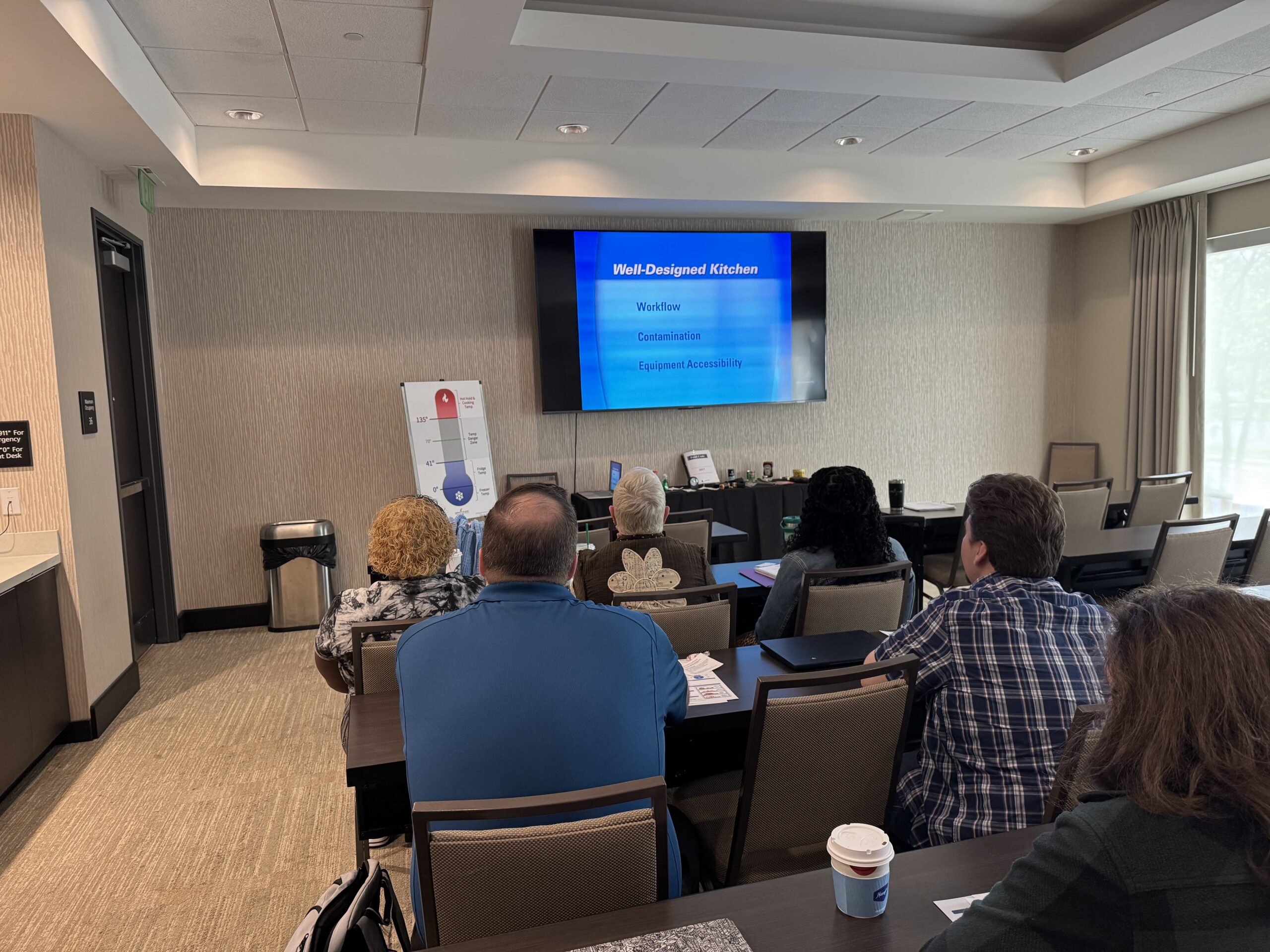
Serve It Up Safe (SIUS) is a Florida-based food safety and hospitality compliance training company. We have been doing this since 2009. We run Food Manager Certification classes in person at 20+ locations across Florida (plus Georgia and Alabama), and we offer online training and exams nationwide. We also handle Food Handler training, Alcohol Safety Training (Responsible Vendor), Human Trafficking Prevention, Allergen Awareness, and Sexual Harassment Prevention.
If you are reading this and you operate in Florida, we have a class near you. Tampa, Orlando, Miami, Jacksonville, Tallahassee, Pensacola, Fort Myers, Sarasota, Clearwater, West Palm Beach, the Keys – we cover the state. If we do not have a public class in your city, we can run one privately on-site.
Quick Q&A: Florida Food Manager Certification
Skip to whatever applies to you.
Q: Is Food Manager Certification required in Florida?
A: Yes, if your licensed food establishment has 4 or more employees engaged in storing, preparing, or serving food. At least one of them needs to be a Certified Food Protection Manager. This is required by Florida Statute 509.039.
Q: Is ServSafe the same as Food Manager Certification?
A: No. ServSafe is a brand owned by the National Restaurant Association. It is one of several approved exams that satisfy the Florida Food Manager Certification requirement. There are 12+ approved providers in Florida. We offer the ServSafe exam because it is the most widely recognized one in the industry.
Q: Who regulates this in Florida?
A: The Florida Department of Business and Professional Regulation (DBPR) regulates food service establishments and enforces Food Manager Certification requirements. Rules vary state to state, so what works in Texas or Georgia does not necessarily apply here.
Q: How long is the certification good for?
A: Five years. After that, you have to re-test. There is no “renewal course.” You take the exam again.
Q: Do my employees need food handler training too?
A: Yes. All food service employees must complete Food Handler training within 60 days of hire under Florida Statute 509.049 and its implementing rules.
Q: Is alcohol server training required in Florida?
A: No, it is not state-mandated. But Responsible Vendor Training is highly encouraged because it gives your business legal protections under the Florida Responsible Vendor Act. It is the only approved alcohol server training program in Florida. More on this below.
Q: Where can I take a Food Manager class?
A: With us. We offer in-person classes across Florida, online training and exams nationally, and private on-site sessions for teams. Jump to the bottom for the links.
The Florida Food Manager Certification Requirement
Florida Statute 509.039 is the law that requires Food Manager Certification at licensed food service establishments. You can read the actual statute on the Florida Senate website here, or look at the DBPR Hotels and Restaurants Food Manager Certification page for the regulator’s plain-English version.
Here is what it actually means:
- If your establishment has 4 or more employees on duty engaged in storing, preparing, or serving food, at least one of them must hold a current Certified Food Protection Manager (CFPM) credential.
- That CFPM credential has to come from an exam program accredited by the Conference for Food Protection (CFP), administered through ANAB (the ANSI National Accreditation Board).
- The certification is valid for 5 years from the date you pass the exam.
- DBPR can request proof of certification at any inspection. If you cannot produce it, you are out of compliance.
This is enforced. It is not a suggestion. If you get inspected and your CFPM cannot show their certificate, that is a violation.
Why DBPR Matters (and Why State-by-State Rules Are Different)
Food safety regulation in the United States is mostly handled at the state level. In Florida, the Department of Business and Professional Regulation (DBPR) is the agency that licenses food service establishments and enforces the Food Manager Certification requirement under Chapter 509 of the Florida Statutes.
DBPR is also the agency that approves which Food Manager Certification programs are valid in Florida. They do this by accepting any program that meets the ANAB-CFP standard.
This is why a Food Manager card from another state may or may not be accepted here. And it is why a national brand like ServSafe is recognized in Florida only because their exam meets the DBPR-accepted standard. Different states, different rules. Florida operators need Florida-valid certification.
ServSafe vs. Food Manager Certification: The Distinction Most People Miss
This is the part we want everyone to understand, because the language gets sloppy fast.
Food Manager Certification is the credential. It is the thing Florida law requires. It is what shows up on an inspection.
ServSafe is a brand. Specifically, it is a product line of the National Restaurant Association. Their exam is one of the ways you can earn the Food Manager Certification credential. It is widely used and well-known, but it is not the only path.
Florida currently recognizes 12 or more ANAB-CFP accredited Food Manager exam programs. Any of them satisfies the requirement under Florida Statute 509.039. You can see the up-to-date list on the DBPR Food Manager page or the ANAB-CFP accredited certification body directory.
So when someone says “I need to get my ServSafe,” what they probably mean is “I need my Food Manager Certification.” They are not wrong, exactly, but they are using a brand name as a category, like calling every tissue a Kleenex.
At Serve It Up Safe, we offer the ServSafe exam because it is the most recognized credential in the industry. But what we actually deliver is Florida Food Manager Certification training – the regulatory credential you need to operate. ServSafe is the exam vehicle. Food Manager Certification is the outcome.
Do Not Forget Food Handler Training (It Is Also Required)
Food Manager Certification covers your manager. It does not cover the rest of your team. Under Florida Statute 509.049 and its implementing rules, every food service employee must complete an approved Food Handler training program within 60 days of hire.
This applies to servers, line cooks, prep cooks, dishwashers, bussers, hosts who handle food or food-contact items – basically anyone in your operation who touches food, food-contact surfaces, or single-service items.
Food Handler certificates are valid for 3 years. Like Food Manager, the program has to be DBPR-approved. We offer Florida Food Handler certificates online and in person, and we provide private on-site sessions if you want to train your whole team at once.
Responsible Vendor Training: Not Required, But Worth It
If you serve alcohol in Florida, you have likely heard about Responsible Vendor Training (RVT). Quick clarification: Florida does not legally mandate alcohol server training. Unlike a number of other states (South Carolina, Texas, several others), there is no statute saying every server needs to be certified.
That said, the Florida Responsible Vendor Act creates a powerful incentive to train. If your business completes an approved Responsible Vendor program and you serve alcohol to a minor or an over-served patron, your business gains statutory protections against suspension or revocation of your alcoholic beverage license, provided certain conditions are met (the violation was committed by an employee, not a manager or owner; the employee was certified; and so on).
In other words: training your staff under the Responsible Vendor Act can be the difference between losing your liquor license and keeping it open.
It is worth noting that Responsible Vendor Training is the only state-recognized alcohol server training program in Florida. There is no other approved framework. If someone offers you “bartender certification” in Florida that is not Responsible Vendor, it does not carry the legal protections.
We offer Responsible Vendor Training privately on-site, online per person, and as a monthly subscription per location.
Renewing Your Florida Food Manager Certification
Five years goes faster than you think.
There is no continuing education path or renewal class for Food Manager Certification in Florida. When your 5 years are up, you re-take the exam. That is the entire process.
We strongly recommend taking a refresher course before you sit for the exam again. The Food Code gets updated, regulations evolve, and even seasoned operators benefit from a structured review. The pass rate is high when you prepare. Do not just walk in cold.
Common Mistakes Florida Operators Make
After 16 years of doing this, we see the same patterns:
- Assuming a manager from another state is automatically certified in Florida. Out-of-state Food Manager certifications are valid in Florida only if the issuing program is ANAB-CFP accredited. Most major programs are, but verify before assuming.
- Letting certification lapse. 5 years is a long time. Calendar it. Set a reminder at year 4 to schedule the next exam.
- Confusing Food Handler with Food Manager. These are two different requirements. You need both: a CFPM at the manager level (if you have 4+ employees), and Food Handler training for every food service employee within 60 days of hire.
- Thinking ServSafe is the only option. It is the most recognized, but DBPR accepts any ANAB-CFP accredited exam. Pick whichever program fits your training needs.
- Not having proof on hand at inspection. The certificate has to be available. A photo on someone’s phone is not always enough. Keep originals on file at the establishment.
The Bottom Line
If you operate a licensed food establishment in Florida with 4 or more employees, Florida Statute 509.039 requires at least one Certified Food Protection Manager on staff. The certification is good for 5 years. DBPR is the regulator. ServSafe is one of several accepted exam programs, but it is a brand name, not the requirement itself.
Pair that with Food Handler training within 60 days for every food employee under Statute 509.049, and consider Responsible Vendor Training if you serve alcohol. That is your full Florida food safety compliance picture.
Get this right, and inspections become a non-event. Get it wrong, and you are looking at fines, violations, and worst case, license suspension.
Ready to Get Certified?
Serve It Up Safe makes Florida Food Manager Certification straightforward. Pick the option that fits how you work:
- Public in-person Food Manager class. Join one of our scheduled classes at locations across Florida. Same-day instruction and ServSafe exam. View our class schedule
- Online Food Manager training and exam. Self-paced training with a remotely proctored exam. Available nationwide. Get started online
- Private on-site Food Manager training and exam. We come to you. Ideal for teams of 8 or more, multi-location operators, or anyone who wants their whole crew trained on the same day. Request a private session
- Have questions about other trainings? We also do Food Handler, Responsible Vendor, Allergen Awareness, Human Trafficking Prevention, and Sexual Harassment Prevention. Contact us or call 813-781-8884.
Serve It Up Safe (Novessent Consulting, Inc.) has been helping Florida hospitality operators stay compliant since 2009. We are based in Tampa, FL and run classes across Florida, Georgia, and Alabama, with online training available nationwide.