Serve It Up Safe Expands Monthly Food Manager Training to Downtown Vero Beach

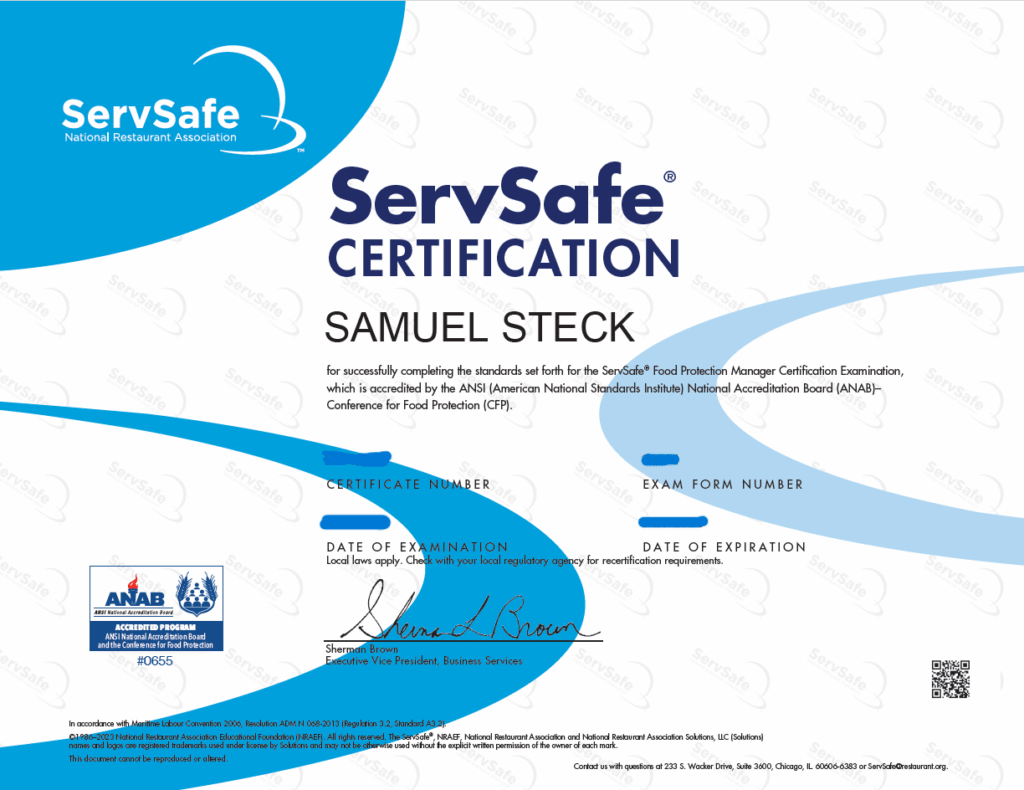
Serve It Up Safe (SIUS) is excited to announce the expansion of our monthly, instructor-led Food Manager Certification class to downtown Vero Beach, Florida. This new location makes it easier than ever for restaurant owners, managers, and hospitality professionals along the Treasure Coast to get certified without traveling long distances.

Our Vero Beach class is centrally located and a short drive from surrounding cities like Stuart, Fort Pierce, Port St. Lucie, Sebastian, and Jensen Beach, making it a convenient option for businesses across the region.

Convenient Downtown Vero Beach Location

All Vero Beach Food Manager classes are held at:

Hampton Inn & Suites
611 20th Place
Vero Beach, FL 32960

Located right in downtown Vero Beach, the venue offers easy access, parking, and a comfortable classroom setting designed for focused, in-person learning.

Food Manager Class Details (What to Expect)

The Vero Beach class follows the same proven format as all Serve It Up Safe instructor-led Food Manager courses across Florida, ensuring consistency, quality, and state compliance.

Class format:

  • Instructor-led, in-person training
  • Small-group classroom environment
  • Taught by experienced, Florida-based instructors

Schedule:

  • Training: 9:00 AM – 1:30 PM
  • ServSafe Food Protection Manager Exam: Starts at 1:30 PM
  • Most students finish the exam in about 60 minutes

What’s included:

  • Comprehensive food safety instruction aligned with Florida DBPR requirements
  • Real-world examples tailored to restaurant, bar, and hospitality operations
  • Proctored ServSafe Food Manager Certification Exam
  • Nationally recognized certification valid for 5 years

Who This Class Is For

Our Vero Beach Food Manager class is ideal for:

  • Restaurant owners and general managers
  • Kitchen managers and chefs
  • Hospitality supervisors and shift leaders
  • New managers needing certification quickly
  • Businesses preparing for inspections or openings

Whether you operate a single location or manage multiple units across the Treasure Coast, this class provides a reliable, in-person solution for meeting Food Manager certification requirements.

Why Choose In-Person Food Manager Training?

While online options exist, many operators still prefer in-person Food Manager training because it offers:

  • Better engagement and retention
  • Live Q&A with an experienced instructor
  • Clear explanations of Florida-specific regulations
  • A structured environment that keeps students focused and on track

For many students, in-person training also leads to higher first-time exam pass rates compared to self-paced online courses.

Serving Vero Beach and the Surrounding Treasure Coast

This new monthly class location is designed to serve hospitality professionals from:

  • Vero Beach
  • Stuart
  • Fort Pierce
  • Port St. Lucie
  • Sebastian
  • Jensen Beach
  • And surrounding Treasure Coast communities

Instead of driving north or south for certification, you can now train right in downtown Vero Beach.

Register or Schedule a Private Class

Seats for public Food Manager classes are limited and tend to fill quickly.
For upcoming dates, private on-site training options, or group bookings, contact:

Sam Steck | sam@serveitupsafe.com

Serve It Up Safe continues to expand across Florida to make Food Manager certification easier, faster, and more accessible for the hospitality industry. We look forward to welcoming Vero Beach-area operators to class.

In-Person Spanish Food Manager Training in Miami (ServSafe® Exam Included)

If you operate a restaurant, food truck, catering company, or hospitality business in South Florida, having a certified Food Protection Manager on staff isn’t just best practice – it’s required. For Spanish-speaking managers and supervisors, in-person training in Spanish makes a real difference in comprehension, confidence, and exam success.

Serve It Up Safe is hosting in-person Spanish Food Manager classes in Miami / Hialeah Gardens, taught by experienced instructors who understand Florida inspections, real-world kitchens, and how to teach this material clearly in Spanish.

Why Choose In-Person Training Over Online?

Online courses can check a box, but they often fall short when it comes to true understanding. Our in-person Spanish Food Manager classes offer several key advantages:

Clear, conversational instruction in Spanish
Concepts like time & temperature control, cross-contamination, and cleaning & sanitizing are explained in plain, practical Spanish – not stiff translations.

Live interaction and Q&A
Students can ask questions in real time, clarify confusing topics, and hear real inspection examples relevant to Miami-Dade County operations.

Higher confidence on exam day
We review key exam concepts, common pitfalls, and test-taking strategies before students sit for the ServSafe exam.

No tech headaches
No struggling with logins, browsers, or proctoring software – just focused learning and a smooth exam experience.

Class Format & Schedule

Our Spanish Food Manager class follows a proven, efficient format:

  • 9:00 AM – 1:30 PM: In-person Food Manager training (Spanish)
  • 1:30 PM: ServSafe® Food Protection Manager Exam (90 questions, Spanish)
  • Most students finish the exam in about one hour

Students leave knowing exactly how to apply food safety principles in their operation – not just how to pass a test.

Upcoming Spanish Food Manager Class Dates (Miami Area)

We currently have the following 2026 dates available:

  • February 7, 2026
  • March 7, 2026
  • April 4, 2026
  • May 2, 2026
  • June 13, 2026

Location

All classes are held at:

Holiday Inn Hialeah Gardens
7707 NW 103rd Street
Hialeah Gardens, FL 33016

This location is easily accessible from Miami, Hialeah, Doral, and surrounding areas.

Who Should Attend?

  • Restaurant managers & assistant managers
  • Kitchen managers & head chefs
  • Owners and operators
  • Anyone required to hold a Food Protection Manager certification in Florida
  • Spanish-speaking supervisors who want training that actually makes sense

How to Register or Schedule

To register for an upcoming class, contact:

Sam Steck
sam@serveitupsafe.com

Who Is Required to Have Food Safety Training in Florida?

Florida food safety requirements are far more nuanced than most operators expect, especially for churches, nonprofits, fraternal organizations, youth leagues, and volunteer-run food service operations.
Unlike many states, Florida does not publish a single, authoritative resource that clearly outlines:

  • Which entities must obtain food safety certifications
  • Which entities are exempt
  • Which state agency has jurisdiction in each scenario

Instead, oversight is split across multiple agencies, exemptions depend heavily on how food is served, and two organizations with nearly identical kitchens can be regulated very differently.
This guide breaks down what is clearly required, what is statutorily exempt, and where gray areas still exist, based on direct guidance from the Florida Department of Business & Professional Regulation (DBPR) and supporting documentation from other Florida agencies.

Who Regulates Food Establishments in Florida?

One of the biggest sources of confusion is that food service regulation in Florida is divided by agency, not by a single universal standard.

DBPRDivision of Hotels & Restaurants

The DBPR Division of Hotels & Restaurants licenses, inspects, and regulates:

  • Restaurants and public food service establishments
  • Hotels, motels, and lodging with food service
  • Public food operations regulated under Chapter 509, Florida Statutes

If food is served to the general public on a regular basis, DBPR is typically the governing authority.

FDACSFlorida Department of Agriculture & Consumer Services

FDACS regulates a completely different category of food establishments, including:

  • Grocery stores and supermarkets
  • Convenience stores
  • Food processors and warehouses
  • Seafood markets
  • Juice and smoothie bars
  • Bottled water and ice plants
  • Certain mobile food units
  • Cottage food operations

Many operators incorrectly assume these businesses fall under DBPR – they do not. FDACS authority is clearly distinct and facility-type specific. While the food safety requirements imposed by DBPR and FDACS are often similar in practice, they are established, enforced, and interpreted by two separate state agencies.

FDOHFlorida Department of Health

FDOH commonly regulates:

  • Nonprofit fraternal and civic organizations
  • Bars that serve only beverages
  • Certain temporary events
  • Schools, camps, and institutional food programs
  • Some non-commercial or exempt food operations

This aligns with DBPR’s confirmation that nonprofit fraternal and civic organizations and drink-only bars fall outside DBPR jurisdiction and are often regulated by FDOH instead

ABT – Division of Alcoholic Beverages & Tobacco

ABT is responsible for:

  • Alcohol and tobacco licensing
  • Alcohol compliance, audits, and enforcement

The Division of Alcoholic Beverages and Tobacco (ABT) is a division within DBPR, but its authority is limited to alcohol and tobacco licensing, compliance, and enforcement – not food safety regulation or food safety training requirements.

Entities That DO Require a DBPR Public Food Service License

The following operations are clearly regulated by DBPR and must comply with standard food safety training requirements:

Examples

  • Restaurants and food service businesses open to the public
  • Hotels, motels, and lodging establishments serving food
  • Any establishment regularly preparing or serving food to the general public
  • Churches or religious organizations serving food to the public
  • Bars, taverns, and lounges serving TCS foods

Important note on bars:

Bars that serve only beverages and “traditional bar snacks” (non-TCS foods such as popcorn, chips, and pretzels) are exempt from DBPR licensing and are typically permitted and inspected by FDOH.

Important note on temporary food service events:

DBPR treats most temporary food service events that are open to the general public – such as fairs, carnivals, food festivals, and similar community gatherings – as licensed food service activities. Vendors at these events generally must obtain a Temporary Food Service Event license from DBPR and pass inspection before operating, even if the event lasts only a few days.

DBPR Training Requirements

For DBPR-regulated establishments:

  • Active Food Service License
  • At least one Certified Food Manager
  • Food Handler training for all employees and volunteers within 60 days

Volunteers are not exempt simply because they are unpaid.

Entities That DO NOT Require a DBPR Public Food Service License

(Statutory Exemptions – §509.013(5)(b)2)

Florida law provides specific exemptions for certain religious and nonprofit organizations – but only under defined conditions.

Exempt from DBPR Licensing

  • Churches serving food only to members and associates
  • Religious, nonprofit fraternal, or nonprofit civic organizations serving food only to members and associates
  • Churches and qualifying nonprofits operating temporary events (fairs, festivals, cook-offs, athletic contests)
  • Nonprofit youth sports leagues (e.g., Little League) operating concession stands under a nonprofit/civic exemption

Being exempt from DBPR does not automatically mean unregulated – many of these operations fall under FDOH authority instead.

DBPR Training Impact for Exempt Entities

If an entity is fully exempt from DBPR jurisdiction:

  • No DBPR Food Service License required
  • No DBPR Certified Food Manager requirement
  • No DBPR Food Handler training requirement

If another agency has jurisdiction, that agency determines any applicable requirements.

The Key Distinction: Members-Only vs. Open to the Public

This is the most important operational line in Florida food safety regulation.

Members-Only (Generally Exempt)

If food is served only to members or associates, the operation is typically exempt from DBPR.

Examples

  • Church serving meals during a service
  • American Legion serving food to members only
  • Fraternal organization hosting private dinners

Open to the Public (Typically Regulated)

Once food service is offered or advertised to anyone, the exemption often disappears.

Examples

  • Church advertising a public pancake breakfast every weekend
  • Fraternal organization operating a public kitchen
  • Nonprofit offering a full menu open to the public regularly

In these cases, the operation may:

  • Require a DBPR license
  • Be referred from FDOH to DBPR
  • Trigger food safety training requirements

Temporary Events: Common (but Limited) Exemptions

Many nonprofits and churches qualify for DBPR exemption when operating temporary events, such as:

  • Fundraisers
  • BBQs
  • Festivals
  • Athletic concessions

However:

  • These events may still require FDOH permitting
  • The organization must comply with rules defining a “temporary event”
  • Repeated or regular events may lose exemption status

Why Some Exempt Organizations Still Get Inspected

A common question is why organizations like American Legion posts receive inspections despite being DBPR-exempt.

The answer:

  • They are not inspected by DBPR
  • They are typically permitted and inspected by FDOH
  • Different agency, different authority

From an operator’s perspective, this distinction is often invisible – which is why confusion persists.

Why There Is No Single “Definitive” Source in Florida

Florida statutes outline exemptions, but:

  • Oversight is split across multiple agencies
  • Each agency publishes guidance independently
  • Jurisdiction depends on how food is served, not just who serves it
  • Some agencies regulate facilities but not training

As of today, no single Florida resource maps entity type to licensing, inspections, and training requirements in one place Practical Takeaways

  • Open to the public? Assume DBPR rules apply until confirmed otherwise
  • Members-only? You may be exempt from DBPR but not from FDOH
  • Volunteers? Treated the same as employees once jurisdiction applies
  • Temporary events? Often exempt from DBPR, but permitting still matters
  • When in doubt: Confirm which agency has jurisdiction before assuming exemption

How Serve It Up Safe Can Help

At Serve It Up Safe, we work directly with regulators and operators to help organizations:

  • Identify which agency regulates their operation
  • Determine whether food safety training is required
  • Select the correct Food Handler or Food Manager certification
  • Avoid unnecessary training – or non-compliance

If your organization is unsure where it falls, we’re happy to help clarify.

Contact us today with any questions.

In-Person Food Manager, On-Site Food Handler, and On-Site Alcohol Training in Florida

Food safety and alcohol compliance training are essential for restaurants, bars, hotels, and food service operations across Florida. Serve It Up Safe provides in-person Food Manager training, on-site Food Handler classes, and on-site Responsible Vendor of Alcohol training designed for real-world operations and Florida requirements.

Below is a breakdown of each training option, including pricing, class length, certification details, and on-site requirements.

In-Person ServSafe Food Manager Training

Our Food Manager training is designed for managers, owners, supervisors, and anyone responsible for food safety compliance.

Training format

• In-person classroom training
• Public classes held throughout Florida
• Private on-site classes available for teams

Class length

• Approximately 6 hours total (4-hour training, then 1-2 hours for the exam)
• Includes instruction and exam on the same day

Certification

• ServSafe Food Manager Certification
• Valid for 5 years

Exam

• Exam is required
• Taken immediately after training
• Results are provided the same day (exams taken on laptop which we provide)

Pricing

• $159 per person for public classes
• Private on-site pricing available upon request

Minimum participants ( private on-site)

• Private on-site Food Manager classes require a minimum of 8 participants

This training meets Florida DBPR requirements and is accepted statewide.

On-Site Food Handler Training

Food Handler training is ideal for hourly front-of-house and back-of-house employees, including servers, cooks, dishwashers, and food runners.

Training format

• Conducted on-site at your location
• Classroom-style instruction for your staff

Class length

• Approximately 60–90 minutes

Certification

• Food Handler Certificate
• Issued upon completion of training

Exam

• No proctored exam required in Florida
• Certificate issued after training completion

Pricing

• Pricing varies based on group size
• Certificates are typically low-cost per employee ($7 per certificate)

Minimum participants

• No minimum required for on-site Food Handler training

This option works well for onboarding new hires or training an entire team at once.

On-Site Responsible Vendor of Alcohol Training

Alcohol training helps protect your business, your staff, and your liquor license.

Training format

• On-site classroom training
• Conducted at bars, restaurants, hotels, and event venues

Class length

• Approximately 1.5 hours

Certification

• Responsible Vendor of Alcohol (RVA) Certificate

Exam

• No formal proctored exam required
• Certificate issued upon completion

Pricing

• On-site pricing available upon request

Minimum participants

• No minimum required for on-site alcohol training

This training meets Florida alcohol education standards and focuses on real-world liability prevention.

Which Training Is Right for Your Team?

Most Florida foodservice operations require multiple certifications to stay compliant. Serve It Up Safe helps you schedule training efficiently, whether you need one manager certified or an entire staff trained on-site.

For scheduling, pricing, or compliance questions, contact our team directly.

2026 ServSafe Food Manager Training Schedule Across Florida

Serve It Up Safe has released its full 2026 in-person Food Manager training schedule, with monthly classes across Florida and expanded coverage beginning in February.

This page includes:

• All 2026 class dates by month
• Training cities across Florida
• Planned training locations and addresses
• New markets launching in 2026

Each class includes in-person instruction and the Food Manager exam on the same day, with immediate results.

New Food Manager Training Markets Launching in 2026

Starting in February 2026, Serve It Up Safe is expanding Food Manager training into additional Florida markets, including:

• Tallahassee
• The Florida Panhandle
• The Florida Keys

These additions allow operators in more regions to complete Food Manager certification without traveling long distances.

January 2026 Food Manager Class Dates

• Gainesville / Ocala – January 12, 2026
• Jacksonville / St. Augustine – January 13, 2026
• Daytona Beach / New Smyrna Beach – January 14, 2026
• Orlando / Kissimmee – January 15, 2026
• Fort Myers / Naples – January 19, 2026
• Sarasota / Bradenton – January 20, 2026
• Clearwater / St. Petersburg – January 21, 2026
• Tampa / Brandon – January 22, 2026
• Miami / Hollywood – January 27, 2026
• West Palm Beach / Fort Lauderdale – January 28, 2026
• Fort Pierce / Stuart – January 29, 2026

February 2026 Food Manager Class Dates

• Gainesville / Ocala – February 9, 2026
• Jacksonville / St. Augustine – February 10, 2026
• Daytona Beach / New Smyrna Beach – February 11, 2026
• Orlando / Kissimmee – February 12, 2026
• Fort Myers / Naples – February 16, 2026
• Sarasota / Bradenton – February 17, 2026
• Clearwater / St. Petersburg – February 18, 2026
• Tampa / Brandon – February 19, 2026
• Key Largo / Florida Keys – February 23, 2026
• Miami / Hollywood – February 24, 2026
• West Palm Beach / Fort Lauderdale – February 25, 2026

March–December 2026 Food Manager Class Schedule

Food Manager classes are offered monthly in the following Florida markets throughout the remainder of 2026:

• Gainesville / Ocala
• Jacksonville / St. Augustine
• Daytona Beach / New Smyrna Beach
• Orlando / Kissimmee
• Fort Myers / Naples
• Sarasota / Bradenton
• Clearwater / St. Petersburg
• Tampa / Brandon
• Miami / Hollywood
• West Palm Beach / Fort Lauderdale
• Fort Pierce / Stuart
• Key Largo / Florida Keys (select months)

Specific monthly dates are published in advance and follow a consistent mid-month rotation.

Planned 2026 Training Locations (Subject to Change)

Serve It Up Safe hosts Food Manager training at professional hotel and conference facilities across Florida.

Planned locations include:

• Gainesville / Ocala
Hampton Inn
4225 SW 40th Blvd, Gainesville, FL 32608

• Jacksonville / St. Augustine
Hampton Inn & Suites
141 Park Ave, Orange Park, FL 32073

• Daytona Beach / New Smyrna Beach
Holiday Inn
930 N Atlantic Ave, Daytona Beach, FL 32118

• Orlando / Kissimmee
Homewood Suites
8745 International Dr, Orlando, FL 32819

• Fort Myers / Naples
Homewood Suites
5255 Big Pine Way, Fort Myers, FL 33907

• Sarasota / Bradenton
Hampton Inn SRQ Airport
975 University Pkwy, Sarasota, FL 34243

• Clearwater / St. Petersburg
Holiday Inn Express
210 Seminole Blvd, Largo, FL 33770

• Tampa / Brandon
Homewood Suites
10240 Palm River Rd, Tampa, FL 33619

• Miami / Hollywood
Holiday Inn
7707 NW 103rd St, Hialeah Gardens, FL 33016

• West Palm Beach / Fort Lauderdale
Best Western
1800 Palm Beach Lakes Blvd, West Palm Beach, FL 33401

• Key Largo / Florida Keys
2026 training location TBA

• Fort Pierce / Stuart
2026 training location TBA

Please note : Training locations and addresses are subject to change. Final location details are sent to registered participants prior to class.

About Our In-Person Food Manager Classes

• In-person classroom instruction
• ServSafe Food Manager exam administered same day
• Immediate exam results
• Certification valid for five years
• Public classes and private on-site options available

Private on-site Food Manager classes require a minimum of eight participants.

Planning Ahead for 2026

Publishing the full annual schedule allows operators to plan certifications around staffing, openings, renewals, and inspections.

If you need:

• A specific month’s schedule
• Private on-site training
• Multi-location coordination

Our team can help. Email us at info@serveitupsafe.com or call us (813) 781-8884.

January 2026 ServSafe Food Manager Classes in Florida – In-Person Training & Exam

If you operate a restaurant, bar, hotel, or foodservice business in Florida, staying compliant with food safety regulations is not optional – and the ServSafe Food Manager Certification is a key requirement.

Serve It Up Safe is now accepting registrations for January 2026 in-person ServSafe Food Manager classes across Florida, with same-day training and exams available in major cities statewide.

Completing your Food Manager certification early in the year helps avoid last-minute scheduling issues and ensures your operation is prepared for inspections and staffing changes.

Learn more about our Food Manager Training here

January 2026 ServSafe Food Manager Training Schedule (Florida Locations)

All January classes include live, in-person instruction and the ServSafe exam on the same day, with immediate results upon completion.

January 2026 Class Dates & Cities :

  • Miami (Spanish) – January 3
  • Gainesville – January 12
  • Jacksonville – January 13
  • Daytona Beach – January 14
  • Orlando – January 15
  • Fort Myers – January 19
  • Sarasota – January 20
  • Clearwater – January 21
  • Tampa – January 22
  • Miami (English) – January 27
  • West Palm Beach – January 28
  • Fort Pierce – January 29

These in-person ServSafe Food Manager classes are ideal for new managers, renewals, and operators managing multiple locations across Florida.

Register here for a January Food Manager class

Why Choose Serve It Up Safe for ServSafe Food Manager Training?

Not all Food Manager classes are the same. Serve It Up Safe focuses on real-world food safety, not just passing a test.

Our ServSafe Food Manager program includes:

  • In-person training and exam on the same day
  • Immediate test results
  • Industry-leading pass rates (90%+)
  • ServSafe certification valid for 5 years
  • Affordable pricing at $159 per person

Our instructors have extensive hospitality and foodservice experience and tailor training to Florida inspection priorities — helping managers reduce violations and improve operational standards. View Food Manager Training details here

Expanding ServSafe Food Manager Training Across Florida in 2026

Beginning in February 2026, Serve It Up Safe will expand Food Manager training into additional Florida markets, including:

  • The Florida Keys
  • Tallahassee
  • The Florida Panhandle

New class dates and locations will be released shortly after the New Year, making it easier than ever to schedule training near your operation.

If you’d like the full 2026 ServSafe Food Manager schedule or a specific month, contact us and we’ll send it directly. Contact us for future dates

Additional Food & Alcohol Safety Training for Florida Operations

Food Handler Training (for FOH & BOH)

Required for hourly employees in many operations.

  • Online training available
  • Only $7 per certificate
  • Includes the free training guidebook

On-Site Alcohol Training

Designed to help protect your liquor license and meet Florida alcohol training requirements.

  • Conducted on-site at your location
  • Ideal for bars, restaurants, and hotels

Private On-Site Food Manager Training

Perfect for training multiple managers at once.

  • Held at your location
  • Flexible scheduling
  • Cost-effective for teams

Register for a January 2026 ServSafe Food Manager Class

Spots are limited for each class location. You can:

  • Register online for a public class
  • Request private on-site Food Manager training
  • Ask us to register multiple team members at once

Starting the year certified helps ensure compliance, confidence, and smoother inspections throughout 2026.

Book your Food Manager class now!

I Can’t Find My ServSafe Certificate – What To Do When You’ve Lost Your Food Manager or Food Handler Certification

Losing your ServSafe certificate (or any Food Manager or Food Handler certificate) can be stressful, especially when an employer, inspector, or licensing office needs a copy right away.
The good news: you can usually recover it.

The tricky part: there is no universal ServSafe certificate lookup and no single statewide database for Food Manager or Food Handler records. Because each approved program maintains its own database, your ability to retrieve a certificate depends entirely on which exam or training provider you used.

This guide will walk you through how to find your certificate, how ServSafe handles replacement certificates, and what to do if you’re not sure which provider you trained with.

There Is No Statewide or National ServSafe Certificate Lookup

(And No Universal Food Manager Lookup, Either)

Many people assume there’s one place to search for any Food Manager certification, but that’s not how the system works.

In states like Florida, there are 12+ state-approved Food Manager programs – each with their own login portals, databases, and customer service departments.

Some of the most common Food Manager exam providers include:

  • ServSafe
  • NRFSP (National Registry of Food Safety Professionals)
  • Always Food Safe
  • Others depending on the state

Because every program issues its own certificate, you must know which company administered your exam to retrieve your document.

If you’re not sure which exam you took, look back at:

  • Old emails
  • Exam confirmation messages
  • Receipts
  • Training provider info
  • Your online account (if you created one)

Once you know the exam provider, you can contact them directly or log in to your account to download your certificate.

How To Find Your ServSafe Food Manager Certificate

If you remember taking ServSafe, use the steps below:

1. Log into your ServSafe account

  • Visit: ServSafe.com → Login → “Certificates” tab
  • Many people never realized their certificate was stored online the entire time.

2. Use ServSafe’s Certificate Lookup Tool

ServSafe offers a basic search option if you remember your exam details.

You’ll need information like:

  • Name
  • Exam date
  • Exam session number (if available)

Keep in mind: If your name is misspelled, you may have trouble locating it.

3. Contact ServSafe customer service

If you still can’t find it, contact ServSafe directly. They can look up your exam using personal details, but response times may vary. You can reach them at 800-765-2122.

What If I Didn’t Take ServSafe?

(NRFSP, Always Food Safe, etc.)

If you took any Food Manager exam besides ServSafe, you’ll need to visit that provider’s website or contact them directly.

Because there are more than a dozen approved companies, there is no central place to retrieve certifications.

Search your email for keywords like:

  • Food Manager exam
  • Food safety certification
  • Food manager cert
  • Exam confirmation

Once you find the provider’s name, visit their site and look for:

  • Certificate lookup page
  • Login portal
  • Lost certificate or Print certificate instructions

Lost Your Food Handler Certificate?

It’s Even Harder – There Are Over 100+ Approved Programs in Florida

Food Handler certificates are even trickier than Food Manager certifications.

In Florida alone, there are 100+ approved Food Handler training providers, including online and in-person options. Every company maintains its own records, meaning:

  • There is no statewide database (there is a database, but it’s not comprehensive and doesn’t give you access to your certificate)
  • There is no universal Food Handler lookup
  • If you don’t know the provider name, you may be out of luck

Some of the most common Food Handler providers include:

  • Food Safety First (the program Serve It Up Safe uses)
  • SafeStaff
  • 360Training
  • StateFoodSafety
  • Learn2Serve
  • ServSafe Food Handler (not approved in Florida)
  • In-house employer training programs

If your Food Handler course was online

You have the best chance – simply log into the provider’s portal and download your certificate.

If it was a paper test or in-person class

You must contact the instructor or company. If they’ve closed or cannot locate your record, you may need to retake the course.

Need a New Food Handler Certificate?

Serve It Up Safe Offers an Affordable, Hassle-Free Option

If you lost your Food Handler card or simply need a new one for employment, Serve It Up Safe offers:

Food Handler Certificates – just $7 each

This includes the Food Handler guidebook, making it significantly more affordable than SafeStaff’s $10+ book and certificate combination.

Online Food Handler Training (Launching January 2026!)

Our online program will be:

  • More affordable than SafeStaff’s $15 online training
  • Easier to understand
  • More engaging
  • Quicker to complete
  • Designed specifically for FOH/BOH staff members

If you need Food Handler certificates today:

We can issue certificates quickly for individuals or entire teams.

Need a Food Manager Certificate Instead?

Serve It Up Safe also offers accredited Food Manager training and exam options for individuals and groups. If you need a Food Manager certification or want to schedule a private class, check out our Food Manager page or reach out directly.

Final Tips for Finding Your Certificate

Here’s a quick checklist:

  • Try to remember which company issued your Food Manager or Food Handler certification
  • Search your email for keywords or receipts
  • Log into your training provider’s online portal
  • Use the provider’s certificate lookup tool (if available)
  • Contact the provider directly for verification
  • If you still can’t find it – you may need to retrain

Whether you need Food Manager training or Food Handler certification, Serve It Up Safe can help you get the documentation you need fast.

Contact us here or reach out to at info@serveitupsafe.com with any questions!

The Hidden Perils of Your Kitchen Sponge

Kitchen sponges might seem like a simple household tool, but they actually harbor a surprisingly complex ecosystem of bacteria. In this piece, I dive into the hidden life of these everyday items and explore why it’s crucial to replace them regularly.

The Microbial World of Your Sponge
Sponges, by design, are porous and retain moisture. This combination creates an ideal environment for bacteria to thrive—especially when food particles and water are present. Over time, these microbes can multiply to levels that might raise health concerns, even if you clean your sponge frequently.

What Research Reveals
Studies tracking bacterial growth in kitchen sponges have shown that microbial populations can skyrocket if a sponge is not properly maintained. Experiments have demonstrated that even after cleaning, some bacteria persist, continuing to multiply within the sponge’s damp, fibrous structure. The findings underscore that a sponge’s internal environment can become a hidden reservoir for microbes.

Effective Cleaning Methods and Their Limitations
Several methods have been proposed to sanitize sponges, such as microwaving a damp sponge, running it through a dishwasher, or applying disinfectant sprays. While these techniques can temporarily reduce the bacterial load, they do not completely eliminate all harmful microbes. Moreover, repeated cleaning cycles can degrade the sponge’s structure over time, reducing its effectiveness and lifespan.

When to Replace Your Sponge
Considering both hygiene and practicality, it’s generally advisable to replace kitchen sponges every few weeks, especially if they are used frequently. Regular replacement is a simple yet effective way to keep your kitchen cleaner and reduce potential health risks associated with bacterial contamination.

Balancing Hygiene and Sustainability
There is also an environmental aspect to consider. Discarding sponges frequently can contribute to waste, prompting a balance between maintaining a hygienic kitchen and adopting more sustainable practices. Exploring options like sponges with antimicrobial properties or alternative cleaning tools may offer a compromise between health and environmental concerns.

Final Thoughts
Understanding the hidden dynamics inside your kitchen sponge highlights the importance of regular replacement and proper cleaning practices. By staying on top of sponge maintenance, you can enjoy a cleaner, healthier kitchen while also considering the broader impact of household waste.

Questions? Contact us here or email us at info@serveitupsafe.com!

Want to learn more about best practices for F&B professionals? Register for our online or in-person ServSafe Food Manager training  register on our website today!

Understanding Time and Temperature Controls for Safe Food Handling

Some foods are more vulnerable to rapid bacterial growth and require careful handling to ensure safety. These foods, known as Time/Temperature Control for Safety (TCS) foods, need proper time and temperature management to prevent foodborne illnesses.

What Makes a Food a TCS Food?

TCS foods share certain characteristics that make them ideal for bacterial growth:

  • They are rich in protein or carbohydrates.
  • They have a high moisture content.
  • Their pH levels range from neutral to slightly acidic.

By recognizing these traits, you can better identify which foods require stricter monitoring during preparation and storage.

Examples of TCS Foods

Foods most likely to require time and temperature controls include:

  • Fresh or cooked meats
  • Dairy-based dishes like cheese, milk, and yogurt
  • Shellfish and fish products
  • Egg-based items
  • Cooked vegetables, including baked potatoes
  • Dishes made with garlic or oil mixtures
  • Sliced fruits and vegetables, such as melons, tomatoes, and leafy greens
  • Protein-rich plant-based foods (like tofu or legumes)
  • Sprouts or sprouted seeds
  • Cream-filled pastries, pies, or custards

Why TCS Foods Require Careful Monitoring

Bacteria thrive when they have food, moisture, and warmth. TCS foods supply nutrients and moisture, and if left at improper temperatures, they create the perfect environment for bacteria to multiply. Under the right conditions, bacterial counts can double every 20 minutes, making even a short time in unsafe conditions risky.

If TCS foods are left in the temperature danger zone for four hours or more, they may contain enough harmful bacteria to cause illness.

The Temperature Danger Zone

The temperature range between 41°F (5°C) and 135°F (57°C) is known as the temperature danger zone. Within this range, bacteria grow rapidly, so minimizing the time TCS foods spend in this zone is critical for food safety.

Best Practices for Keeping TCS Foods Safe

To reduce risks, follow these time and temperature guidelines for TCS foods:

  • Cold Storage: Store cold foods at 41°F (5°C) or lower to slow bacterial growth.
  • Hot Holding: Keep hot foods at 135°F (57°C) or above to prevent bacteria from multiplying.
  • Cooling Procedures: Use shallow containers, ice baths, or frequent stirring to cool hot foods quickly and evenly.
  • Reheating: Ensure foods are reheated to at least 165°F (74°C) within two hours before serving.
  • Time Limits: Discard any TCS foods left in the temperature danger zone for more than four hours.

By following these practices, you can effectively control bacterial growth, protect your customers or guests, and reduce the risk of foodborne illnesses. Proper handling of TCS foods is a key element of food safety!

Have questions about TCS food? Contact us here or email us at info@serveitupsafe.com!

Need the ServSafe Food Manager certification or Florida Food Handler certificate? Register on our website!

How to Avoid Food Safety Violations

Recent Food Safety Violations

Between November 18 and December 1, 2024, two restaurants in Polk County, FL were cited for double-digit health code violations during routine inspections, and several others were found with multiple infractions. One restaurant received 11 violations, which included improper food storage temperatures, unclean food contact surfaces, and inadequate handwashing facilities. Another establishment had 10 violations, encompassing issues such as cross-contamination risks, lack of employee hygiene training, and improper sanitization of equipment. Additionally, other restaurants were flagged for violations ranging from improper cold holding of food items to issues with pest control and failure to label and date prepared foods. These findings highlight widespread lapses in food safety practices across various establishments, potentially putting public health at risk.

The Importance of Compliance with Food Safety Training and Certification

In Florida, food service establishments are legally required to comply with specific food safety training and certification mandates to protect public health and reduce the risk of foodborne illnesses. Florida Statutes Chapter 509.039 requires that managers in a public food service establishment receive their Certified Professional Food Manager (CPFM) certification and that establishments employing four or more people responsible for the storage, preparation, display, and serving of food to the public must have at least one CPFM on duty at all times. This certification is valid for five years, after which re-certification through testing is required. View Serve It Up Safe’s CPFM class schedule under the “Manager’s Classes” tab of our website.

Furthermore, Every food employee in a Florida DBPR-licensed food service establishment who receives, prepares, stores, or serves food, or handles food contact surfaces, must complete Food Handler training specific to their job duties, as required by Florida Statutes Chapter 509.049. Newly hired employees require training within 30 days of employment. For more information on how to acquire the Food Handler certification, visit the “Food Handler’s Cert” page of our website.

Proper training not only helps restaurants meet legal requirements but also significantly reduces the likelihood of violations by keeping staff informed about best practices and reinforcing the importance of maintaining high standards. A focus on compliance can help restaurants prevent serious issues such as cross-contamination, improper storage, and pest infestations, contributing to a safer dining experience and protecting their reputation in the community.

Questions? Contact us!