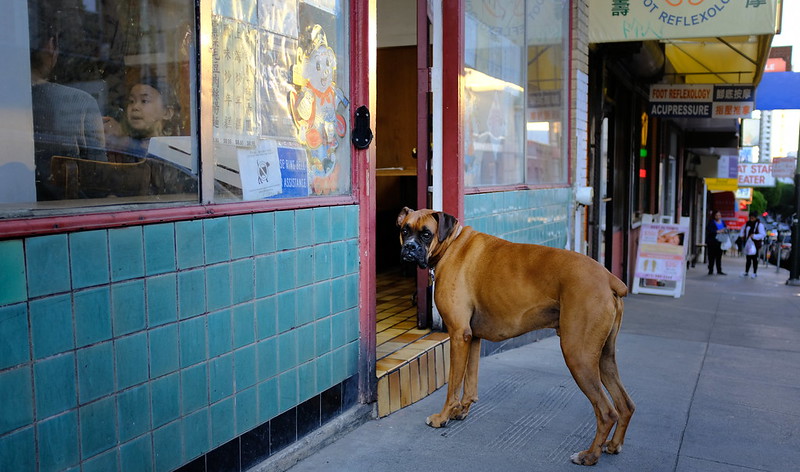
Allowing Dogs in Your Restaurant: FAQs for Operators

How does the Dixie Cup Clary Local Control Act affect service animals in restaurants?
The Dixie Cup Clary Local Control Act only applies to pet dogs, not service animals.

What is a service animal?
A service animal is defined as a guide dog, signal dog, or other animal individually trained to provide assistance to an individual with a disability.

Can I take my service dog into a restaurant?
Yes, service dogs are allowed in restaurants, although only in areas that are not used for food preparation and that are usually open for customers, such as dining rooms and sales areas.

Can I take my pet dog to a restaurant?
Pet dogs are generally not allowed in public food service establishments, but local governments can pass ordinances allowing dogs in designated outdoor seating areas. These ordinances must follow state law, including permit fees and sanitation requirements. Restaurants need a local permit before allowing dogs in outdoor areas, and dogs are still prohibited inside the establishment. Check with your local government to see if such an ordinance exists and if the restaurant has the required permit.

Can local governments charge restaurants a fee to issue permits for allowing dogs in restaurants?
Yes, and they may also set fees to recover other costs associated with this permit program.

Can establishments charge an access fee to pet dog owners?
This is not addressed in the state law and will likely be market-determined.

May I bring my cat or other pets to the designated outdoor dining area?
The law applies only to dogs. Other animals remain prohibited from food service establishments.

What are the minimum health or food safety conditions that must be met to allow pet dogs?
Food service employees must wash their hands after handling dogs and are prohibited from handling dogs while serving food or handling tableware. Patrons should be reminded to wash their hands before eating, and hand sanitizer must be provided at each table. Dogs must stay on a leash, remain under control, and are not allowed on chairs or tables. Contact between dogs and any food service items is prohibited. Surfaces must be cleaned and sanitized between patrons, and any dog waste accidents must be cleaned immediately. Signs must remind staff and patrons of the rules. Dogs are not allowed to travel through indoor or non-designated areas, and local governments may set additional requirements for permits.

How do I apply for a permit to allow pet dogs at my restaurant?
Local governments that adopt an ordinance are responsible for the permit process. Contact your local government to find out how to apply for a permit.

Can I transfer a “dogs in restaurant” permit that was issued to the previous owner of the public food service I recently purchased?
No. The law states that permits are not transferable and expire upon sale of the establishment. You must apply for a new permit from the local government to continue to allow pet dogs in a designated outdoor dining area.

Who enforces the new local ordinances?
Local governments are required to monitor permit holders for compliance in cooperation with the Division of Hotels and Restaurants.

Does the law require local governments to notify the Division of Hotels and Restaurants if a local dogs in restaurants ordinance is adopted?
Local governments must provide the division with copies of all approved applications and permits for allowing dogs in designated outdoor areas of food service establishments. Although they are not required to notify the division when such ordinances are adopted, the division requests notification to track local ordinances under the Dixie Cup Clary Local Control Act, which aids in compliance efforts.

What assistance does the Division of Hotels and Restaurants provide to local governments implementing an ordinance relating to dogs in restaurants?
The division provides a sample application for a permit that local governments may use as a reference or in whole. The division is also available to discuss development of enforcement procedures and regulations with local governments.

What enforcement procedures must local governments implement regarding dogs in restaurants?
Local governments must create procedures to handle complaints, document them, and report both the complaints and their enforcement actions to the Division of Hotels and Restaurants. The specific enforcement process varies based on each local government’s structure and ordinances.

For more detailed answers from the state regulatory authority, please visit:
DPBR Division of Hotels & Restaurants FAQs > Food Service General Information > Dogs in Restaurants

Questions? Contact us here or email us at info@serveitupsafe.com!

Want to learn more about best practices for F&B professionals? Register for our online or in-person ServSafe Food Manager training register on our website today!

Why Training and Food Safety Are Essential for Restaurant Success

A Great Way to Exceed Customer Expectations is to Invest in Restaurant Employees

The full-service restaurant industry is experiencing unprecedented growth, with food service sales projected to surpass $1.1 trillion in 2024. This rapid expansion brings heightened competition, as nearly half of restaurant operators anticipate increased rivalry compared to previous years.

While exceptional cuisine remains fundamental, today’s patrons demand more – they seek friendly service, efficient operations, and, critically, stringent food safety standards. Ensuring food safety is paramount, as lapses can lead to severe health risks, legal repercussions, and irreparable damage to a restaurant’s reputation.

Investing in comprehensive learning management systems (LMS) is an effective strategy to meet these multifaceted expectations. LMS platforms facilitate the delivery of consistent training programs, empowering staff to uphold best practices in service and food safety. This approach not only minimizes operational errors but also fosters a culture of continuous improvement.

Empowering Employees to Address Challenges

A well-structured LMS ensures that all team members are well-versed in standard operating procedures, including critical food safety protocols. Proper training enables employees to prevent contamination, adhere to hygiene standards, and respond effectively to potential hazards, thereby safeguarding public health and the establishment’s credibility.

Reducing Operational Errors

In the fast-paced restaurant environment, oversights can occur, but a robust LMS provides staff with easy access to essential information, reducing the likelihood of mistakes. For instance, clear guidelines on food storage temperatures and cross-contamination prevention are vital components of food safety that can be reinforced through continuous training.

Maintaining Consistent Service Quality

Uniform training ensures that every employee delivers a consistent level of service and adheres to food safety standards. Consistency not only enhances customer satisfaction but also builds trust, encouraging repeat business and positive word-of-mouth.

A Recipe for Success

Prioritizing learning management and food safety is essential for restaurants aiming to thrive in a competitive market. By equipping employees with the necessary tools and knowledge, establishments can enhance operational efficiency, ensure customer well-being, and foster lasting loyalty.

In an industry where growth and competition are at an all-time high, integrating comprehensive training programs that emphasize both service excellence and food safety is a strategic imperative.

Contact us here or email us at info@serveitupsafe.com!

Need the ServSafe Food Manager certification or Florida Food Handler certificate? Register on our website!

The Ostrich Effect and Its Impact on Your Business

As a restaurant or hotel owner or manager, your days are a whirlwind of decisions, demands, and dilemmas – a constant balancing act that leaves little room for anything else. From ensuring your guests have a seamless experience to managing staff schedules, it can feel like there aren’t enough hours in the day. But have you ever found yourself delaying or avoiding something crucial (e.g., dealing with customer complaints or scheduling required staff training) because it feels overwhelming or unpleasant to deal with right now? If so, you might be experiencing the Ostrich Effect.

The Ostrich Effect is a cognitive bias where individuals avoid or ignore information they perceive as negative or inconvenient. It’s named after the (mythical) idea that ostriches bury their heads in the sand to avoid danger. While this avoidance might bring short-term relief, it can lead to significant long-term problems.

How the Ostrich Effect Shows Up in Training Decisions

When it comes to food and alcohol safety training, the Ostrich Effect can play a big role in delaying decisions that are essential to your business. Here’s how it often manifests:

  1. Avoiding Required Food Manager Training: The thought of finding time to complete a multi-hour training program or send a staff member to do so can feel daunting, especially when schedules are tight and staffing is constrained. It’s easy to put it off, hoping it won’t become an issue when the health inspector shows up.
  2. Ignoring Food Handler Training Needs: Maybe the health inspector forgot to request your hourly BOH/FOH Food Handler certificates last time, so you avoid diving into whether your new staff has become certified and ensuring all staff’s certification is up to date.
  3. Postponing Responsible Vendor Alcohol Training: This training is vital to reduce liability and ensure compliance with alcohol service laws. Yet, managers often avoid it because they perceive it as another “thing to do” on an already overflowing plate.

Why Avoidance is Risky

While it’s tempting to avoid these tasks, this approach can lead to serious consequences:

  • Fines and Legal Issues: Non-compliance with training requirements can result in hefty penalties, lawsuits, or even business closures.
  • Reputation Damage: A poorly trained staff can lead to foodborne illnesses or alcohol-related incidents, which can harm your reputation and drive customers away.
  • Operational Disruption: Addressing issues reactively (like a failed health inspection) is far more disruptive and costly than handling them proactively.

Breaking Free of the Ostrich Effect

The good news is that acknowledging the problem is the first step to overcoming it. Here’s how you can proactively manage your training needs:

  1. Start Small: Focus on one training need at a time. For example, schedule Food Manager Certification for your key staff first, then move on to other areas.
  2. Work with Experts: Partnering with organizations like Serve It Up Safe simplifies the process. We provide streamlined, in-person, and online training options tailored to your schedule.
  3. Think Long-Term: Remember that training isn’t just about compliance; it’s an investment in your team’s competence, your customers’ safety, and your business’s success.

Take Action Today

At Serve It Up Safe, we understand how overwhelming it can feel to manage all the moving parts of your business. That’s why we make it easy to stay compliant with training for Food Managers, Food Handlers, and State Alcohol Training requirements. By tackling these needs head-on, you can avoid the risks associated with avoidance and build a safer, more successful business.

Don’t let the Ostrich Effect hold you back. Contact us today to schedule your training – because the sooner you act, the sooner you can breathe easy knowing your business is on the right track.

Need to schedule ServSafe Food Manager training, Florida Food Handler training, or Florida Responsible Vendor of Alcohol training for you or your team today? Contact us!